The Best Puppy Feeding Schedule App to K...
Quick answer: Bringing home a new puppy is an incredibly exciting experience, but it is also exhausting. Unlike adult dogs who generally eat once or twice a day, growing puppies require strict, frequent meals to maintain their blood sugar and fuel their rapid growth.
Why Puppies Need Strict Feeding Routines
Veterinarians generally recommend feeding young puppies three to four times a day. This isn't just a suggestion; it is biologically necessary. Puppies burn calories rapidly and have small stomachs, meaning they need a steady intake of nutrients throughout the day.
Relying on your memory to maintain this strict schedule is risky, especially during the sleep-deprived early weeks of puppyhood. A **puppy feeding schedule app** like Petive removes the mental burden. You can set specific reminders for breakfast, lunch, and dinner, ensuring your puppy's nutritional needs are met consistently.
Linking Feeding Time to Potty Training
Many new owners don't realize that a strict feeding schedule is actually the secret to successful housebreaking. The golden rule of puppy biology is: *what goes in on a schedule, comes out on a schedule.*
When you feed your puppy at the exact same times every day, their bathroom habits become predictable. If you know they ate at 12:00 PM, you know they will likely need a potty break by 12:20 PM. Because Petive also functions as a **dog potty training tracker app**, you can log both their meals and their bathroom breaks in one unified timeline, helping you spot patterns and prevent indoor accidents.
Managing the Chaos with Petive
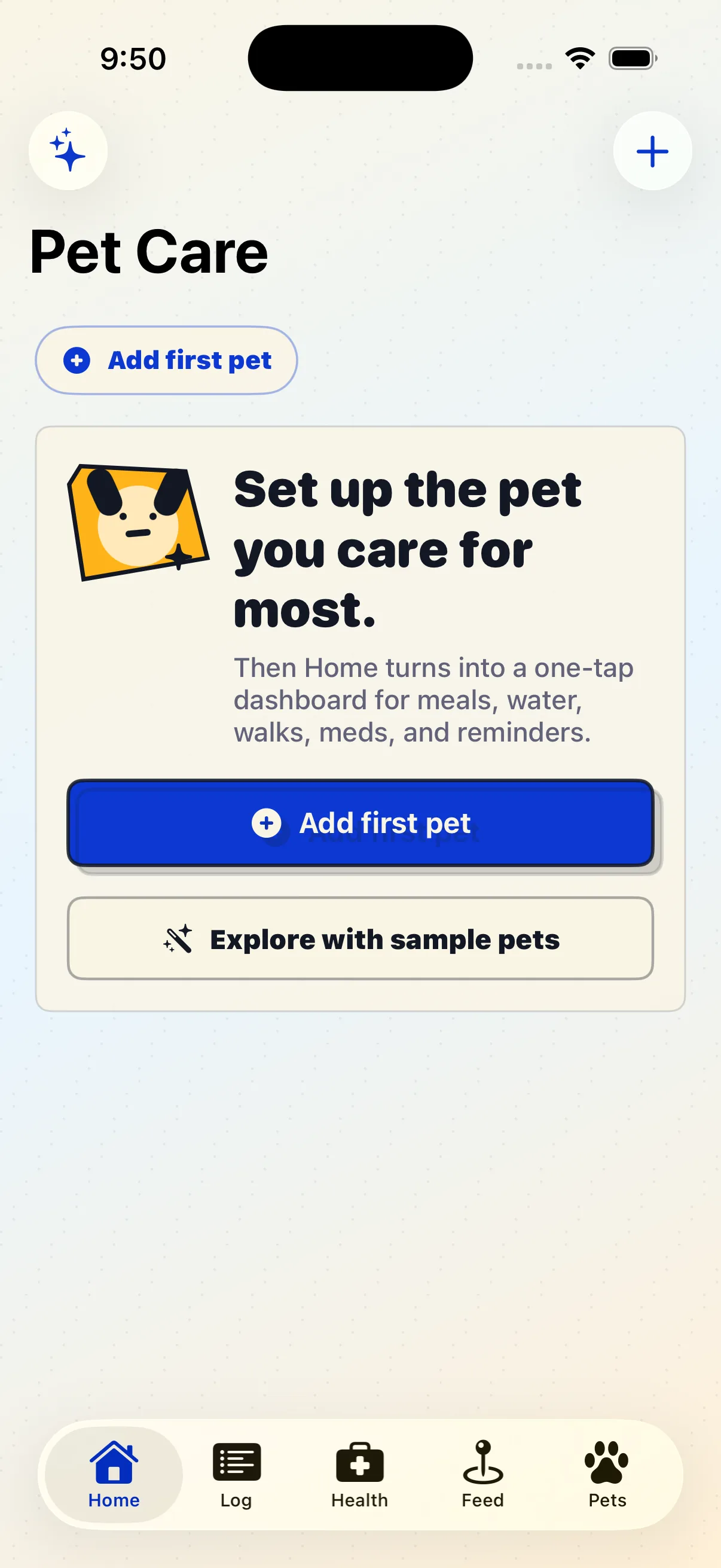
Petive simplifies the chaos of puppyhood through its visual "Care Rings." On your home dashboard, you can configure your puppy's daily goals to require three separate feeding logs.
As you progress through the day, you simply tap the "Feed" button. The app records the exact time the meal was given and visually fills a portion of the ring. This gives you instant, visual reassurance that your puppy is staying on track.
Common questions
Sources and editorial note
This guide was written by Jade using current guidance from established veterinary and animal-care organizations. It provides general educational information, not veterinary diagnosis or treatment. Ask your veterinarian about your individual pet.