Dog Feeding Schedule by Age, Plus a Daily Meal Log
Quick answer: A dog feeding schedule should specify the dog's food, total daily amount, meal times and the person responsible for each meal. Two meals a day are a common starting point for healthy adult dogs; puppies and dogs with particular health needs may need a different plan. Agree the right frequency and portions with your veterinarian.
Before you begin
Then make that plan easy to follow. A useful schedule lets a caregiver see what is due and confirm what has actually been served, especially when several people live with the dog.
How often should you feed a dog?
VCA's veterinary feeding guide commonly recommends at least two daily meals for adult dogs and explains that puppies can benefit from smaller, more frequent meals. Individual needs and medical conditions can change the arrangement.
| Dog's situation | Planning approach |
|---|---|
| Healthy adult | Discuss a regular meal pattern and an appropriate daily amount |
| Growing puppy | Confirm age- and size-appropriate food, portions and meal frequency |
| Dog with a prescribed diet or medication routine | Follow the individual veterinary plan, including meal timing |
| Dog whose appetite or weight has changed | Arrange veterinary advice rather than adjusting by guesswork |
Age is only part of the decision. Food composition, body condition, activity and health all matter. A breed name or the size of the bowl cannot tell you the correct portion.
A sample adult dog feeding schedule
This example shows how a household might organise a healthy adult dog's already-agreed two-meal plan. The times are illustrative; they are not a prescription for every dog.
| Time | Task | Responsibility and record |
|---|---|---|
| 7am | Breakfast using the written portion instructions | Morning caregiver serves and logs the meal |
| During the day | Approved training food or treats within the daily plan; fresh water available | Caregiver records extras or uses the day's allocated allowance |
| 6pm | Dinner using the written portion instructions | Evening caregiver checks the record, serves and logs |
| Evening check | Confirm both meals and note any uneaten food | One named person resolves missing information |
Choose times that the household can maintain, including weekends. If a medical plan ties food to medication, use those specific directions and ask the veterinarian before changing the timing.
Write portions in a form everyone understands
Record the exact product and portion unit. “A scoop” is ambiguous if the house contains several scoops or people fill the same one differently. If the plan uses weight, keep a suitable scale with the food. If it uses a measuring cup, identify the cup and the intended level.
Use this card beside the food:
Dog: ___ Food and formulation: ___ Daily amount and measurement method: ___ Breakfast portion / time: ___ Dinner or other meal portions / times: ___ Training food and treats included in the plan: ___ Plan agreed with / last checked: ___ Caregiver questions or veterinary instructions: ___
Check that the meal portions and extras match the intended daily plan. When changing food, the same weight or cup measure may represent a different energy intake. Discuss the amount and use our food-transition guide for the next conversation.
Prevent two people from serving the same meal
Give each meal a main caregiver and a backup. The backup checks the completion record before stepping in. Log the meal after it happens, including food left behind or a delay.
| Date | Scheduled meal | Served at | Amount offered / amount left | Served by |
|---|---|---|---|---|
| ___ | ___ | ___ | ___ | ___ |
Decide how to resolve uncertainty. An empty bowl could mean the dog ate, the bowl was washed or a meal was missed. Check with the other caregiver rather than treating the bowl as the record.
For homes where this already causes confusion, our double-feeding story shows the household problem behind the log. If a dog may have received extra food and seems unwell, contact a veterinarian for advice specific to the dog.
Adapt the routine for puppies
A puppy needs an individual plan for growth and meal frequency. Ask the breeder or rescue for the existing food instructions and review them with your veterinarian. Avoid copying an adult's two-meal example onto a young puppy's day.
The AKC's puppy-feeding timeline gives these broad stages for discussion:
| Puppy age | General meal-frequency guide |
|---|---|
| 6–12 weeks | Usually four meals a day |
| 3–6 months | A transition towards three meals |
| 6–12 months | A transition towards two meals |
These are general age bands. Confirm timing for your puppy's size, growth and health, particularly for very small puppies or those with medical needs. Changing meal frequency and changing from puppy to adult food are separate decisions to discuss with your veterinarian.
Record each meal and provide the toilet opportunities and supervision your puppy needs. The puppy daily schedule and potty-training schedule cover those activities in more detail. A schedule should help the household respond to the puppy rather than force them into an inconvenient timetable.
Know when the schedule needs a conversation
Keep brief notes about a change in appetite, uneaten food or difficulty following the plan. Contact your veterinarian about a new or persistent change, and seek prompt advice when the dog is unwell. Puppies and dogs with existing conditions may need particularly timely guidance.
If a meal or medication dose is missed, uncertain or vomited, ask for instructions appropriate to that dog's plan. Do not double a dose or change prescribed timing to make the checklist look complete.
Hand the plan to the next caregiver
Before a trip, copy the current food details into the sitter instructions template and demonstrate the measurement. Include the last meal given and identify who handles the next one.
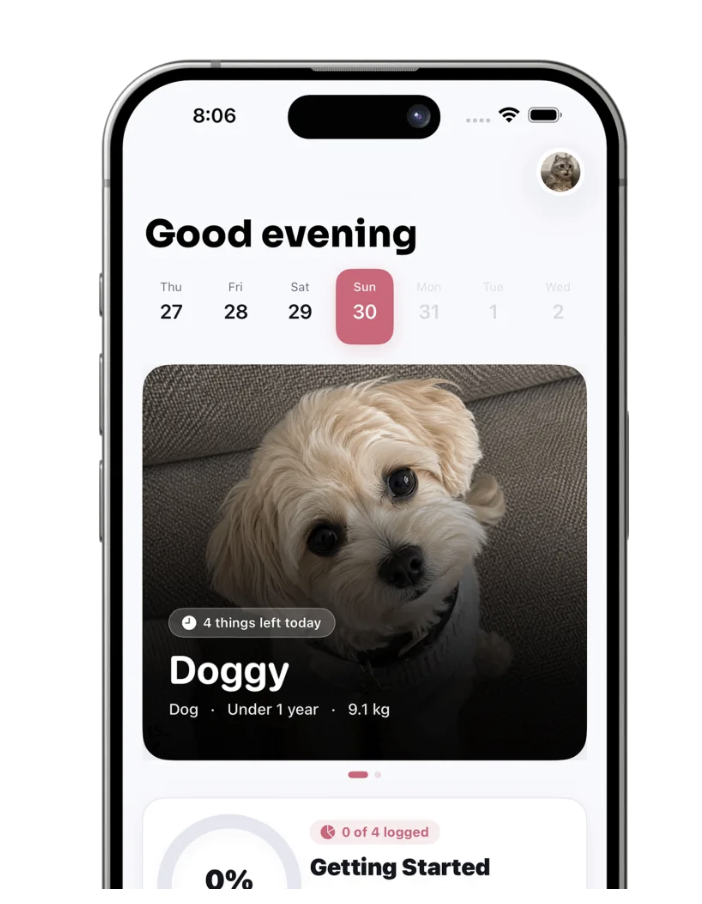
Petive lets you record meals and set reminders on iPhone. Shared Pack can help participating caregivers see logged care; it requires VIP and signed-in iPhone accounts, and shared updates need connectivity. A reminder shows that a meal is due. A logged, synchronised entry shows what a caregiver recorded as completed.
Common questions
What are the best times to feed a dog?
Choose consistent times that suit the dog's agreed feeding plan and the people providing care. The example above is a household-planning illustration, not a universal optimum.
How much food should each meal contain?
Use the individual daily amount and division agreed for your dog. Packaging can provide a starting point for discussion, but it cannot account for every dog's health and circumstances.
Can a dog eat once a day?
Some individual plans differ, but two meals are a common adult starting point. Ask your veterinarian what fits your dog before changing an established routine.
Sources and editorial note
This guide was prepared by the Petive Editorial Team using guidance from established veterinary and animal-care organizations. Unless a named reviewer is shown, it has not been independently reviewed by a veterinarian. It provides general educational information, not veterinary diagnosis or treatment. Ask your veterinarian about your individual pet.