Puppy Schedule by Age
Quick answer: A new puppy needs a structured daily routine balancing frequent potty breaks, age-appropriate meals, structured play, and 16 to 20 hours of restorative sleep per day. Young puppies thrive when events happen in the exact same sequence every day: wake up, immediate outdoor potty break, breakfast, play and training, another potty break, and a quiet nap. As puppies mature from 8 weeks to 6 months, their bladder capacity expands, meal frequency decreases from four times to two or three times daily, and awake windows gradually lengthen.
Puppy schedule overview by developmental stage
Puppy needs change rapidly during their first half-year of life. The table below outlines how daily routines shift from early infancy at 8 weeks to early adolescence at 6 months.
| Age Stage | Max Bladder Hold (Awake) | Daily Meal Frequency | Total Daily Sleep Target | Typical Awake Window |
|---|---|---|---|---|
| 8–12 Weeks | 1 to 2 hours | 4 meals per day | 18 to 20 hours | 45 to 60 minutes |
| 3–4 Months | 3 to 4 hours | 3 meals per day | 16 to 18 hours | 60 to 90 minutes |
| 4–6 Months | 4 to 5 hours | 2 to 3 meals per day | 14 to 16 hours | 90 to 120 minutes |
Sample 8–12 week old puppy daily schedule
At 8 to 12 weeks of age, puppies are adjusting to a new home environment and require near-constant oversight. Their digestive systems process food quickly, necessitating four smaller meals spread throughout the day.
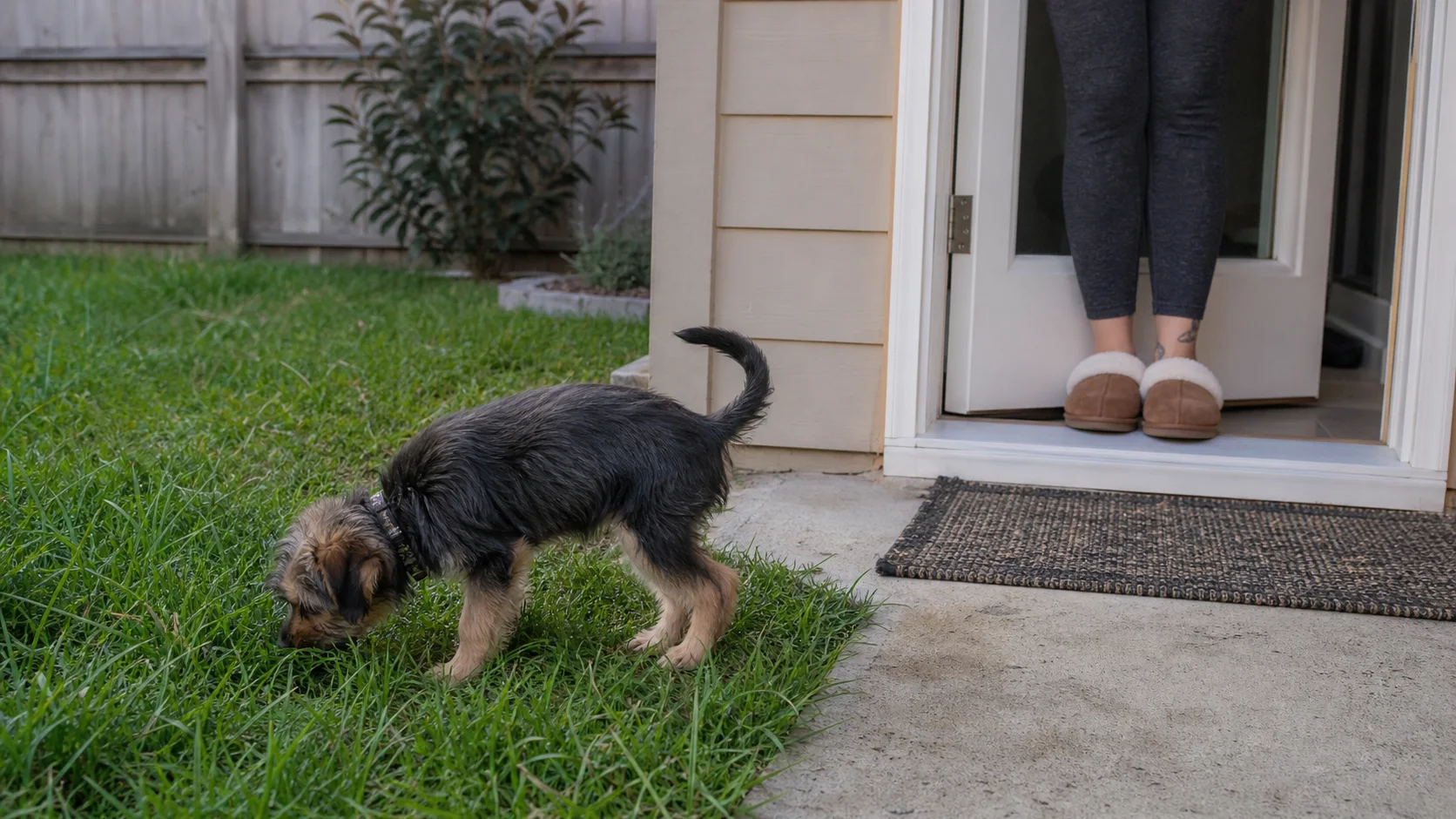
- 6:00 AM: Wake up and immediate outdoor potty break. Praise immediately upon eliminating outdoors.
- 6:30 AM: Breakfast (Meal 1). Allow 15 minutes to eat, then remove remaining food.
- 7:00 AM: Post-meal potty trip, followed by 20 minutes of calm indoor exploration or gentle play.
- 7:30 AM: Morning nap in crate or quiet pen (1.5 to 2 hours).
- 9:30 AM: Wake up and immediate potty break.
- 10:00 AM: Short 10-minute leash walk or socialization exercise.
- 11:00 AM: Mid-morning potty break.
- 11:30 AM: Lunch (Meal 2).
- 12:00 PM: Post-lunch potty trip, followed by nap time (2 hours).
- 2:00 PM: Wake up, outdoor potty trip, and gentle mental enrichment (snuffle mat or chew toy).
- 3:30 PM: Mid-afternoon meal (Meal 3).
- 4:00 PM: Post-meal potty break and quiet rest.
- 5:30 PM: Evening walk or outdoor yard exploration.
- 6:30 PM: Dinner (Meal 4).
- 7:00 PM: Post-dinner potty break and family relaxation time.
- 8:00 PM: Refresh the water bowl and begin a calm bedtime routine. Plan another potty trip after drinking rather than using a universal water cut-off.
- 9:00 PM: Final evening potty break and quiet bedtime in crate.
Sample 3–6 month old puppy daily schedule
Between 3 and 6 months, your puppy’s stamina increases and potty intervals lengthen. Meals can be consolidated into three daily feedings at 3 months and down to two feedings by 6 months.
- 6:30 AM: Morning wake up and outdoor potty trip.
- 7:00 AM: Breakfast (Meal 1) and fresh water.
- 7:30 AM: Outdoor potty trip and 30-minute interactive walk or play session.
- 8:30 AM: Morning nap or quiet crate rest while family works.
- 12:00 PM: Midday break: potty trip, lunch (Meal 2 if on 3-meal schedule), and 15 minutes of basic obedience training.
- 1:00 PM: Afternoon nap or calm play with puzzle toys.
- 5:00 PM: Evening walk and playtime.
- 6:00 PM: Dinner (Meal 2 or 3).
- 6:30 PM: Post-dinner potty trip and family wind-down time.
- 9:30 PM: Final outdoor potty trip and bedtime.
Common questions
How much sleep does an 8-week-old puppy need?
An 8-week-old puppy needs 18 to 20 hours of sleep per 24-hour period. Puppies grow rapidly during sleep and can easily become over-aroused and bitey when overtired.
When can I transition my puppy from 4 meals to 2 meals a day?
Reduce from 4 meals to 3 meals around 12 weeks of age. Transition from 3 meals to 2 meals daily between 5 and 6 months of age, in consultation with your veterinarian.
What should I do if my puppy refuses to nap in the crate?
Establish a post-potty wind-down routine with soft lighting and a safe chew item. Ensure the crate is sized appropriately and associated with positive experiences like high-value treats.
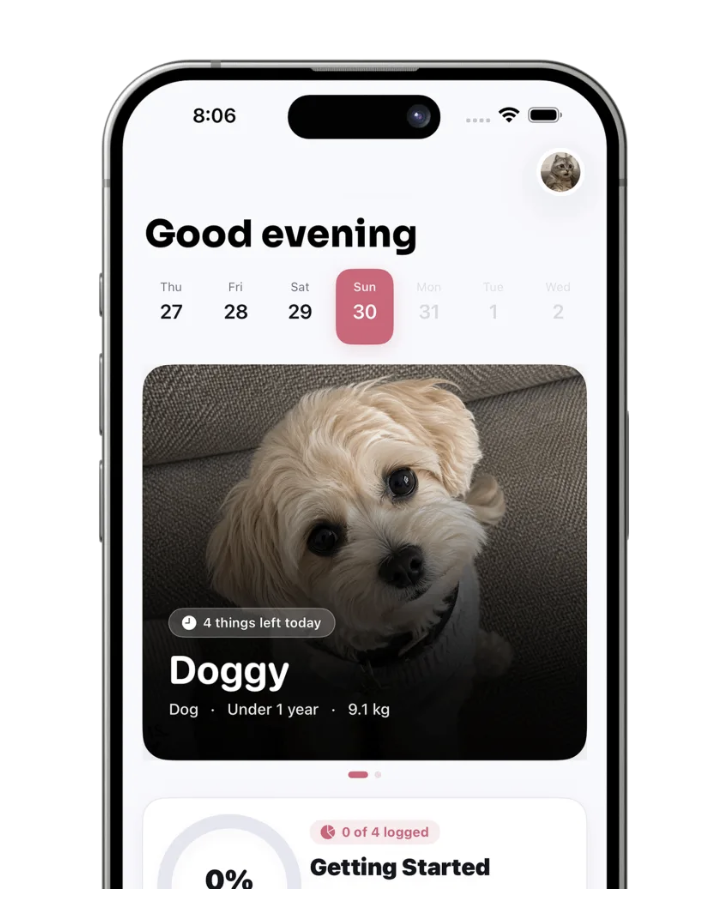
Petive helps family members sync puppy potty times, feeding schedules, and nap logs in real time so your puppy gets consistent care every single day.
Sources and editorial note
This guide was prepared by the Petive Editorial Team using guidance from established veterinary and animal-care organizations. Unless a named reviewer is shown, it has not been independently reviewed by a veterinarian. It provides general educational information, not veterinary diagnosis or treatment. Ask your veterinarian about your individual pet.