Dog Breeds
Quick answer: Dog breeds offer clues about a dog's background, appearance and likely interests. Use those clues to start a shortlist, then ask about the individual dog's behaviour, health and current routine. This directory introduces ten breeds, with registry references and practical questions to help you compare them.
Before you begin
A photograph can get you interested. An ordinary Tuesday is a better test of the match: who will provide company, training, meals, exercise and care when work runs late? Write down what your home can offer before deciding which dog you want.
Browse dog breeds
Browse this selected A–Z directory. It includes popular companions and less familiar breeds; it is not a complete list or a ranking. The summaries draw on the linked American Kennel Club profiles. The questions are our prompts for discussing a particular dog with a rescue, breeder or veterinarian.
Beagle
A hunting hound with a history of working in packs. AKC describes a sociable companion.
Before choosing: What does this dog's current caregiver report about company, vocalising and following scents?
Registry reference: BeagleBichon Frise
A small companion breed with a sturdy build and a lively personality.
Before choosing: Can a groomer show you the coat-care routine and quote its ongoing cost?
Registry reference: Bichon FriseChihuahua
A very small Mexican breed described by AKC as alert and full of personality.
Before choosing: How will everyone in your household handle and interact with a very small dog?
Registry reference: ChihuahuaDachshund
Known for a long body and short legs, with two sizes and three coat varieties.
Before choosing: Which size and coat are you considering, and what home adaptations does the vet recommend?
Registry reference: DachshundGolden Retriever
A Scottish gundog with a history of field work and participation in canine sports.
Before choosing: Where will training and shared activity fit into an ordinary working day?
Registry reference: Golden Retriever
Photo: Herwig Kavallar. Source · Public domain Cropped, resized and converted to WebP. Labrador Retriever
An outgoing, energetic retriever described by AKC as medium to large.
Before choosing: Can each caregiver manage this individual dog's size and activity comfortably?
Registry reference: Labrador RetrieverMiniature Schnauzer
The smallest Schnauzer breed, described by AKC as outgoing and low shedding.
Before choosing: What grooming and training routine is this dog already comfortable with?
Registry reference: Miniature SchnauzerPoodle
Poodles come in Standard, Miniature and Toy sizes, with a curly coat and an athletic background.
Before choosing: Which size fits your home, and who will manage grooming and daily activity?
Registry reference: Poodle
Photo: Benmahjoub mohamed. Source · CC BY-SA 4.0 Cropped, resized and converted to WebP. Sloughi
A North African sighthound with a history of hunting game. AKC describes reserve around strangers.
Before choosing: How will you provide secure exercise and introduce unfamiliar people at this dog's pace?
Registry reference: SloughiWhippet
A streamlined, fast hound with a strong interest in chasing.
Before choosing: What safe exercise space and arrangements around smaller animals can you provide?
Registry reference: Whippet
Compare the care you can actually provide
Choose two or three candidates, then answer the same questions for each. Avoid deciding that one is the winner because it receives more flattering adjectives in a breed description.
| Compare | What to find out | What to write in your plan |
|---|---|---|
| Daily activity | What does this dog currently do and enjoy? | A realistic weekday routine and a backup caregiver |
| Time with people | How does this individual cope with the current household's absences? | Your usual time away and the support available |
| Grooming | Which tasks can you do, and which need professional help? | A demonstrated routine and a local cost estimate |
| Handling and training | What skills and experiences does the dog already have? | What you need to learn together |
| Health | What records and screening results are available? | Questions for your vet before committing |
| Living space | How will the dog rest, toilet and move around your home? | Any changes needed before arrival |
For example, a household choosing between a Labrador and a Poodle might first compare activity arrangements, adult size and grooming support. A household with several caregivers should also ask whether everyone can follow the same instructions. There is no need to make every decision from a breed label.
Explore by the decision you are making
- Best dogs for first-time owners: compare starting points for your first dog.
- Most popular dog breeds: understand what registration rankings do and do not show.
- Rare dog breeds: meet less familiar breeds and examine the evidence behind rarity claims.
- Hypoallergenic dogs: separate coat preferences from claims about human allergies.
- Best pets for apartments: consider the whole home routine when space is limited.
Meet the individual before deciding
Use a breed description as a list of things to investigate. Ask for specific examples: what happened on the last walk, how the dog greeted a visitor, and how grooming went. For a dog already living in a home, ask the caregiver to describe a typical day from morning to bedtime.
Bring your household's questions to the conversation. A promise that a breed is good with families does not answer whether this dog is comfortable with your children, other animals or visitors. Ask what introductions and ongoing management would involve. A responsible decision can also mean waiting or considering a different individual.
If you are adopting, keep mixed-breed dogs on your shortlist. You can compare their observed routines and care needs using the same questions without needing to assign a precise breed mix.
Prepare the first week
Once the match is agreed, collect written instructions for meals, walks, grooming and any veterinarian-directed care. Identify one person to organise the handover, then make sure every caregiver knows where the current instructions live.
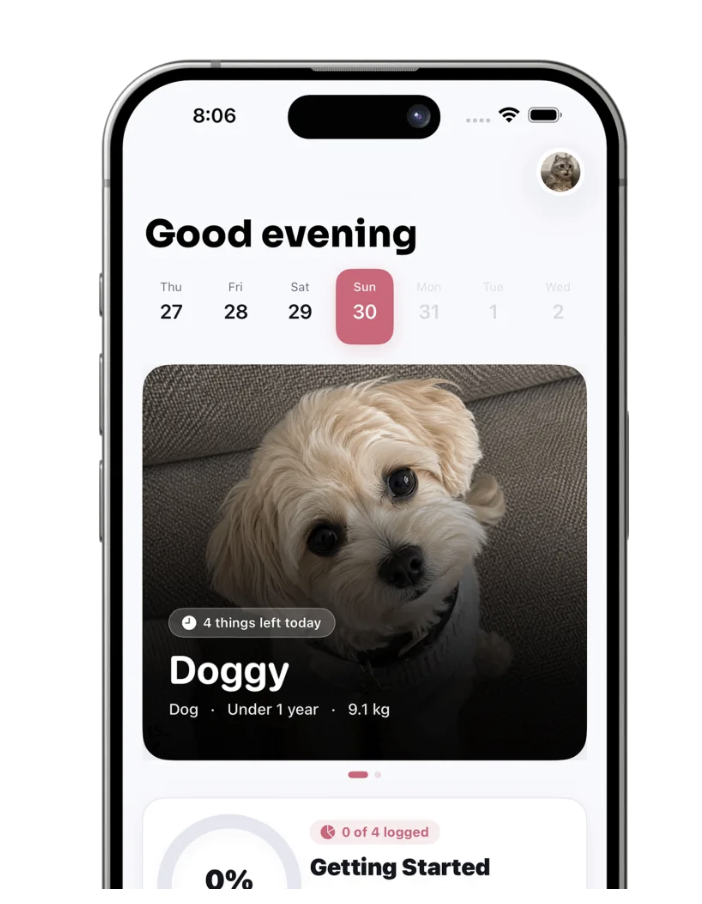
Our new puppy checklist covers preparations for a puppy. For a dog of any age, the pet sitter instructions guide offers a useful structure for recording a routine. Petive can help you log completed care on iPhone after your dog arrives.
Common questions
Which dog breed is best for a first-time owner?
Start with your time, home and support, then compare individual dogs. Our first-time owner guide considers several breeds and the responsibilities to discuss. No breed name removes the need to learn handling, training and daily care.
Does a small dog automatically suit an apartment?
Size is only one part of the decision. Ask about the dog's activity, vocalising, time alone and access to toileting, then check your building's rules. A small footprint does not answer those questions.
How many dog breeds are there?
The answer depends on the registry and what it recognises. Use the AKC breed directory for its current list. This Petive page introduces ten selected breeds and does not claim to count every breed worldwide.
Can I identify a dog's breed from a picture?
A resemblance can suggest questions to ask, but it is not proof of ancestry. Keep any available breeder or rescue records and avoid treating a visual guess as a confirmed pedigree.
Are low-shedding dogs hypoallergenic?
A shedding preference is different from an allergy guarantee. Read our hypoallergenic dog guide before relying on a breed's coat as the basis for an allergy-related decision.
Sources and editorial note
This guide was prepared by the Petive Editorial Team using guidance from established veterinary and animal-care organizations. Unless a named reviewer is shown, it has not been independently reviewed by a veterinarian. It provides general educational information, not veterinary diagnosis or treatment. Ask your veterinarian about your individual pet.
- AKC breed directory
- Beagle: registry reference
- Bichon Frise: registry reference
- Chihuahua: registry reference
- Dachshund: registry reference
- Golden Retriever: registry reference
- Labrador Retriever: registry reference
- Miniature Schnauzer: registry reference
- Poodle: registry reference
- Sloughi: registry reference
- Whippet: registry reference