
How to Coordinate Pet Care With Your Partner or Sitter
Quick answer: When two or more people look after the same animal, care stumbles in the seams. Not because anyone stops loving the pet — because the plan lives in conversation: a hallway "did you walk him?" message, a paper note that outlives its accuracy by three days, a sitter handed a mountain of instructions and no way to ask follow-up questions.
Before you begin
Coordinating care is a system design problem, not a communication problem. The household that fixes it stops asking for a summary of the animal's day, because the day is already written down where everyone can see it. Here's the method — and how Petive carries it on iPhone.
The method: one log, every person, every time
A working shared-care system has four properties:
- One timeline, visible to everyone. Feedings, walks, water, medication — all in the same record, all the time.
- Every entry carries its author. "By whom" isn't gossip; it's the only grain of truth households need on a busy day.
- Everyone logs their own care. No "I'll tell you later" — the reporting is literally one tap while doing it. Everything else poisons the log.
- Handoff notes live with the log. What sits next to the history is what the next caregiver reads: what's due next, what's unusual, what to watch.
Run those four and something quietly nice happens: the pet care questions become boring. "Did you walk him?" becomes "yes — at 7:10, by Sam" without a single message being sent.
Coordinating with Petive
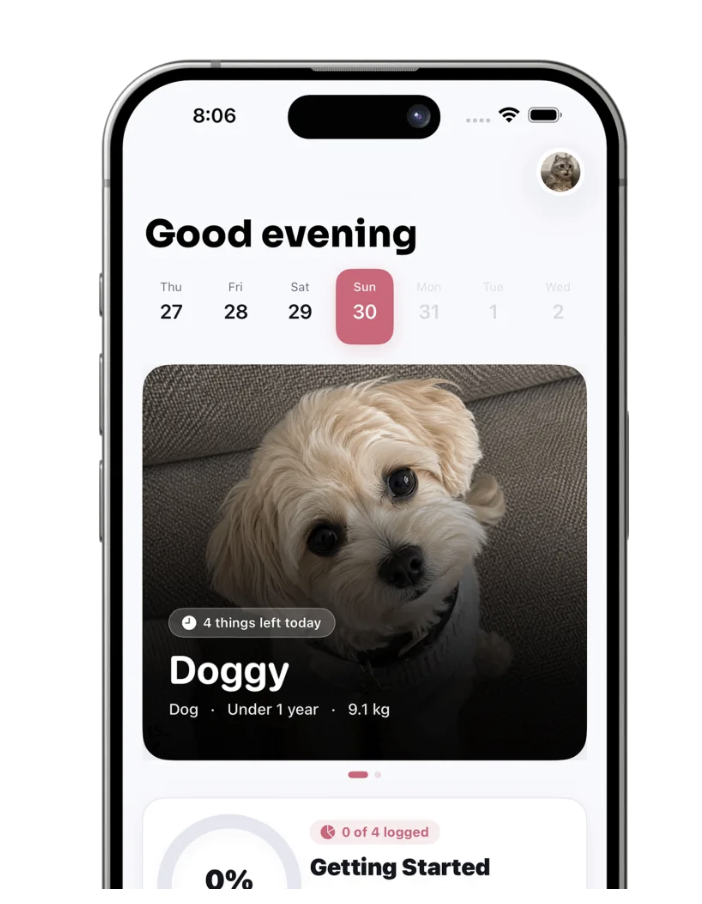
Petive is a pet care tracker for daily care, routines, reminders and health records, and its Shared Pack feature is the shared-care layer: a shared timeline across the household's invited caregivers, with attribution.
The workflow is deliberately small:
- Invite. Add your partner, sitter or walker — each gets their own access, in a role you control (read-everything, or log-what-they-do).
- Log in the moment. Each person quick-logs care as they do it — meal, water, walk, medication. Time and author record themselves.
- See the day without asking. The care rings and timeline are the shared "what happened today" surface for every invited person.
- Hand off with the history attached. Sitters walk into today's chores with the last day's record behind them — which meals, which walks, which dose was missed, constructed *from facts*, not debriefs.
The same structure works at distance: sitting your friends' dog? A shared pack gives them the care record without a trip for the keys. Every change lands in the log — and no one comes home to a Pet Store question with no owner.
If you need a formal written handoff for longer absences, pair this with our pet sitter instructions guide — and to understand situations where a course is already underway, our medication organization guide covers scheduling shared doses.
Common questions
Does a sitter have to buy Petive?
No. Invited caregivers — partners, roommates, sitters, dog walkers — join your pack and log the care they do without buying anything. The household's main account keeps the pet's profile and history in one place.
Can I control what a sitter can change?
Yes. Roles let you decide what invited people can see and do — a sitter on duty logs their care; a curious relative who asked for dog photos can look around without changing anything.
What happens when everyone uses it inconsistently?
Check the history after a few days of "near misses" — entries record the moment it happened. The fix is usually one gentle reminder to the logged pattern: log when you do it, not when you remember. Shared logs strengthen fastest when the household agrees with the habit once, together.
Sources and editorial note
This guide was prepared by the Petive Editorial Team using guidance from established veterinary and animal-care organizations. Unless a named reviewer is shown, it has not been independently reviewed by a veterinarian. It provides general educational information, not veterinary diagnosis or treatment. Ask your veterinarian about your individual pet.