How to Organize Your Pet's Medication Schedule and Records
Quick answer: Medication is the one part of pet care where "I think we gave it already" isn't a harmless mistake — it's either a skipped dose or a doubled one, and both are awkward in ways normal household clutter isn't. The fix isn't a better memory. It's a system: one schedule, copied exactly from your vet's instructions, where every dose is recorded and anyone in the household can check what actually happened.
Before you begin
Here's how to organize a pet's medication schedule and records so the household always has the same answer.
First rule: the schedule comes from your vet
The instructions that govern pet medication are the ones your vet or pharmacy wrote on the bottle and the discharge sheet: which medication, how much, how often, until when, with what. An organized household doesn't invent a smarter version of that — it copies it, faithfully, into a format everyone can follow and tick off. When outside questions come up — what a label term means, how a drug class is generally used — the FDA's Animal & Veterinary resources are the neutral reference shelf, and your clinic is the personal one.
Two exceptions worth saying out loud:
- If instructions are unclear or two documents seem to disagree, ask the clinic — they know what was prescribed and why.
- If a dose seems to have been skipped, doubled, or reacted badly, contact the vet or clinic before doing anything clever. "Aw, give him the missed one now with the next one together" is precisely the decision not to make from memory.
An organizational system protects the plan — it doesn't replace the prescriber.
The system in five parts
- One schedule, one source. Copy the vet's instructions once into a single schedule: medication name as written, dose text as written, times, route (mouth, ear, eye), start and end dates. All the meaningful dates live in one place instead of three bottles' worth of labels.
- A due time and a done log. For each dose, a time it's due — and, just as important, a record of when it was actually given. The gap between those two is where households lose medication history.
- Reminders that reach whoever is around. Medication usually fails at "nobody saw the time go by." A reminder at dose time, and a log that shows who gave what, keeps the schedule honest on busy days.
- Refills visible before they emergency. If the bottle empties on a weekend, the refill should be a calendar fact, not a discovery. Note the refill date next to the schedule.
- Documents with the schedule. The prescription sheet, the clinic's instructions, and any lab results belong with the medication record — so the whole story sits in one place when the vet asks.
Keeping all of this with Petive
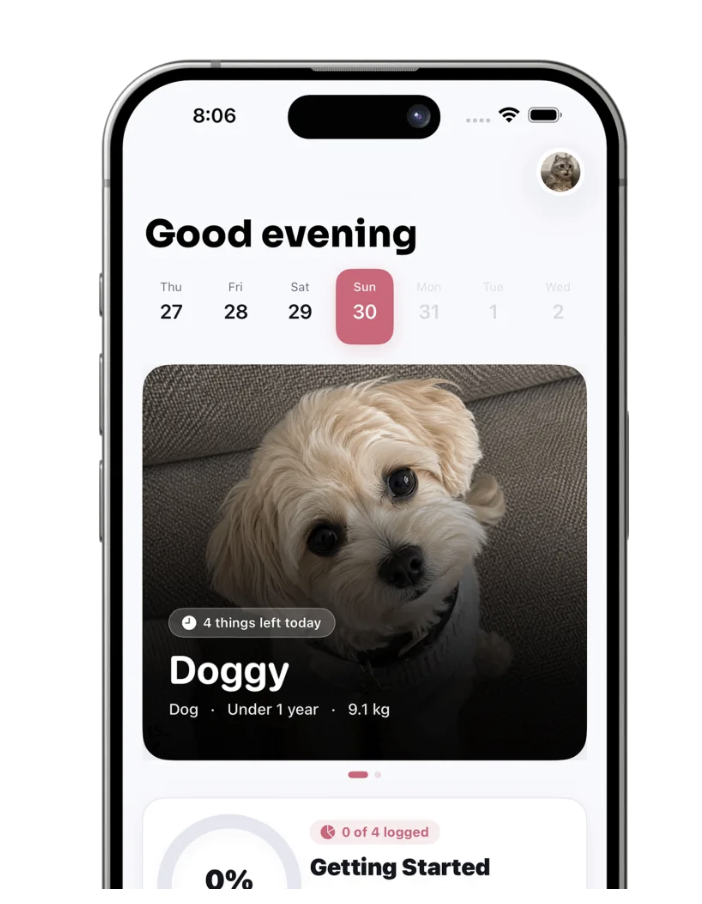
This is the workflow Petive is built for on iPhone: a pet care tracker for daily care, routines, reminders and health records.
- Medication lives in the daily routine. Doses show up among the day's care so they're as visible as meals — and each dose gets a one-tap log the moment it's given, timestamped and attributed to whoever gave it.
- Reminders fire at the schedule and the log confirms what actually happened, so the question "did the cat get her morning pill?" has a scrollable answer — a problem one of our founding stories knows intimately.
- Documents stay with the pet. Photographs of the prescription sheet, vet instructions and lab results keep with your pet's records, so instructions and history don't live in separate universes.
- Households share the same truth. Invite a partner or sitter and everyone sees the same schedule and log; a missed dose stops being a contested memory.
Because everything is timestamped, the record you need at the next appointment — "this is when it started, this is every dose, this is what changed" — already exists.
A quick checklist for the next transition onto new medication
Vet says a new medication starts tomorrow. Tonight's five minutes:
No medical decisions — just administration, which is what households are good at when the system supports it.
Common questions
What if we missed a dose — or think a dose was given twice?
Contact the prescribing clinic and follow their direction. The history you logged (times, doses, who gave what) is exactly what they'll want to know. Don't adjust or double up on your own.
Can I keep the medicine name and doses private?
Yes. This is your household's record. Petive keeps health information in your pet's records rather than in public feeds, and analytics don't carry medication details.
Our pet sitters give the medication too — does this work for them?
Yes. Invited caregivers see the schedule, get the reminder at dose time, and log what they gave with their own name. When you get the pet back, the medication history came back with them.
Sources and editorial note
This guide was prepared by the Petive Editorial Team using guidance from established veterinary and animal-care organizations. Unless a named reviewer is shown, it has not been independently reviewed by a veterinarian. It provides general educational information, not veterinary diagnosis or treatment. Ask your veterinarian about your individual pet.