How to Keep Track of Your Pet's Daily Care
Quick answer: You fed the dog this morning — you're fairly sure. But was the medication given before or after breakfast, and did anyone top up the water bowl while you were out? Keeping an animal's care history in your head works fine for about two days of an ordinary week. Then a partner, a sitter, a second pet, or a slightly busy Tuesday walks into the picture, and "fairly sure" turns into asking around.
Before you begin
This guide shows a way of keeping track of your pet's daily care that survives real life: everything you did, recorded as you do it, in one place — so any day can be checked instead of remembered.
Why tracking from memory breaks down
A pet's day contains more care moments than it feels like while you're doing them. Most households end up storing the answers in a messy mix of:
- one person's memory — usually whoever carries most of the care, and gets tired first
- group-chat messages that scroll away within hours
- sticky notes next to the food that stop being updated
- a paper chart that stays accurate until someone forgets it exists
None of these are bad habits — just unreliable storage. The information exists, but it heads to four different places, which makes the two questions that actually matter impossible to answer: was today's care done? and when exactly was it last done?
Keeping track, in the sense that helps, means two things: every care moment is noted where the whole household can see it, and past days can be looked up when a question comes up. Between vet visits, the ASPCA's general pet care guides are a useful baseline for what "normal" should look like — the tracker below covers what actually happened.
The method: note completed care, not intentions
What works is short: turn every completed care task into a recorded entry. A system you can actually keep up with has three properties.
- Completeness beats detail. A simple note of meals, water, walk and medication for every day outperforms an elaborate diary kept enthusiastically for four days and never again.
- Time-stamped, by the person who acted. "Walked, 7:40 am, by Sam" is a fact. "Someone should walk him in the evening" is a hope shared by four people with no shared memory.
- Kept where everyone already looks. Records in a drawer or a desktop file don't survive the moments when a second person steps in.
Petive — a pet care tracker for daily care, routines, reminders and health records — puts these principles into one iPhone app, so instead of inventing storage, you log and it keeps everything. Here's what that looks like in practice.
How the tracking works in Petive
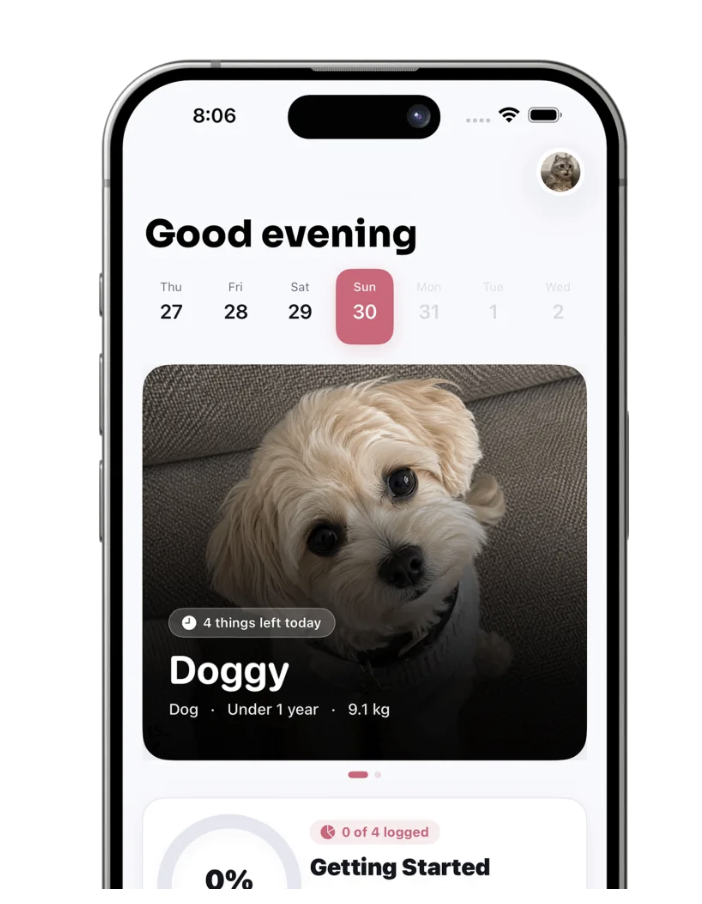
Petive organizes the day around a few taps. Each of the everyday care tasks has its own quick-log control on the Home screen. Tap Meal after feeding, Water after refilling the bowl, Walk when the leash goes on, Medication when the pill is given — and each entry keeps the time and who logged it.
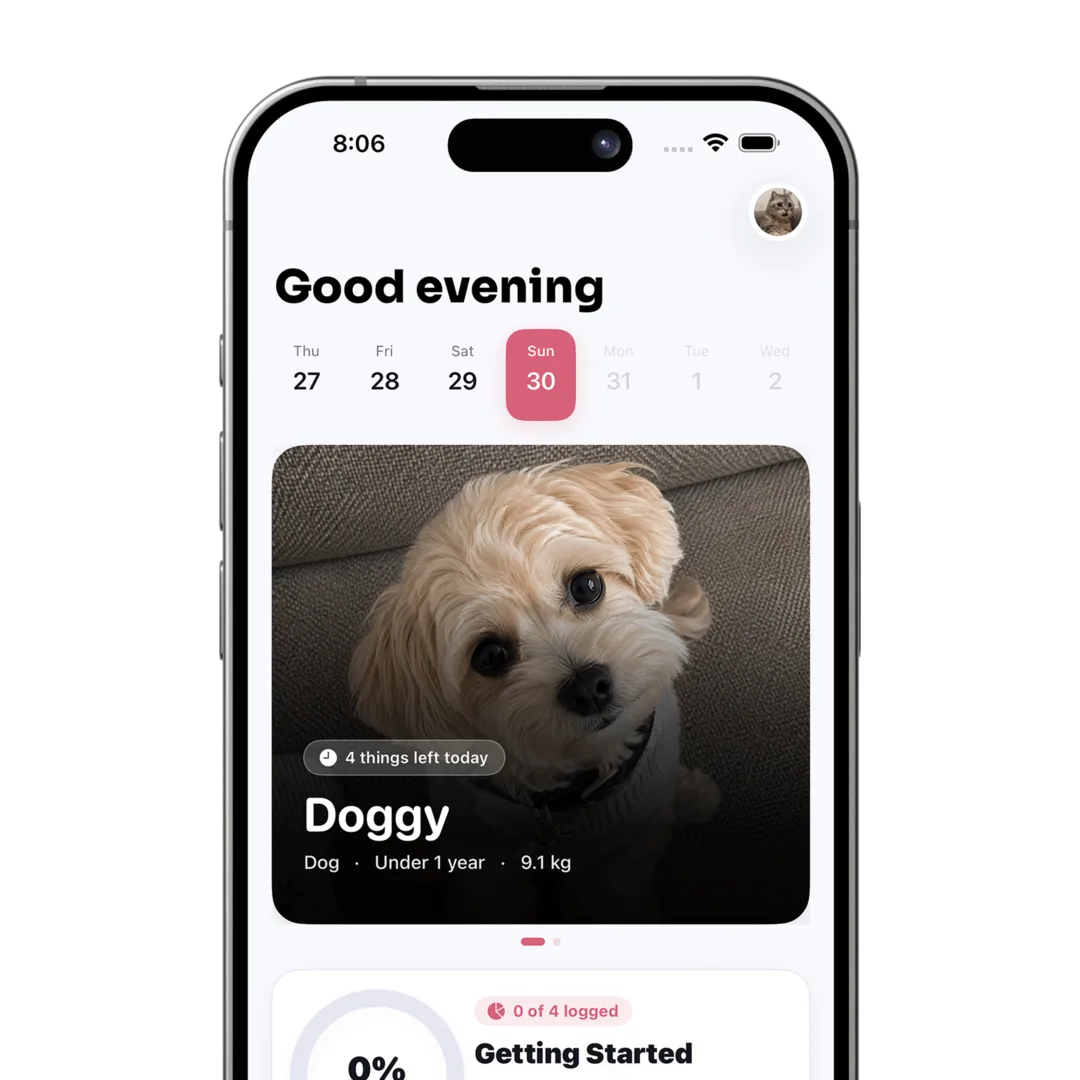
One tap also updates the care rings — a plain, at-a-glance view of how today's feeding, water, walk and medication are progressing as the day actually unfolds. Nothing here measures your pet medically. The value is humbler and more useful: today's care is visible instead of remembered.
The speed matters more than anything else. A log that takes two taps gets maintained. A log that requires typing gets abandoned by Wednesday. After a walk, for example, the entry lands in Petive's care history in one tap, and the timeline shows the day unfolding in order:
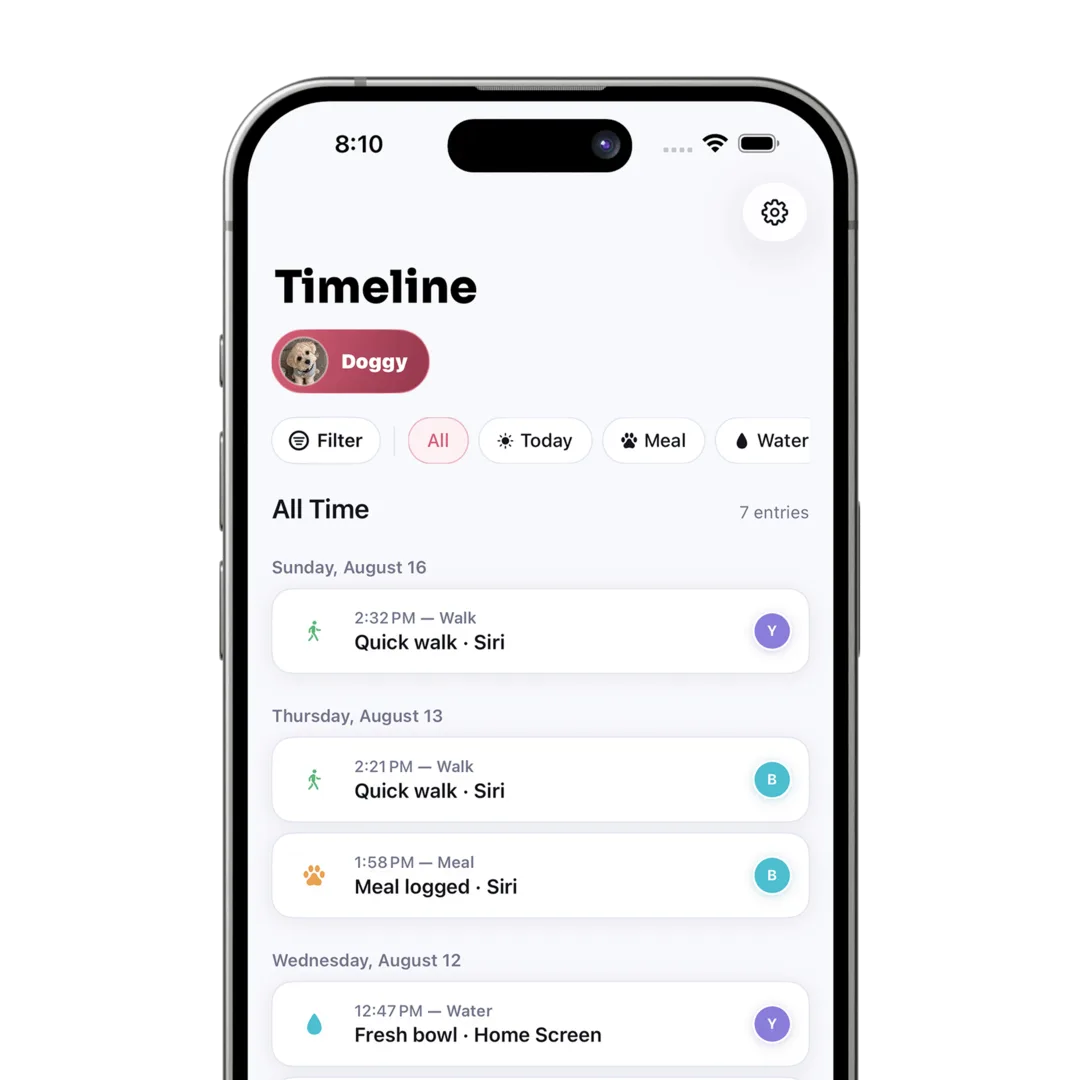
When a real question comes up — "did he get his pill?", "has she been out since lunch?", "what changed in the last week?" — the timeline answers from history rather than memory. And when an animal is under instructions from your vet, the dated record is exactly what you want ready before an appointment.
For the parts that must not slip, reminders connect to the same daily view: set the routine once, and a nudge appears at the time you chose to whoever is using the app.
What you end up with
After even a week of logging this way you have:
- today's care visible at a glance, not estimated or asked about
- a dated record of meals, water, walks and medication
- the actual last time the medicine was given, every time it matters
- a record any partner or sitter can read — or pick up in one tap when they step in
The effort never rises above "tap as you go," which is exactly why it sticks.
Common questions
Do I have to log only meals and walks?
Those are the quick-log defaults. Notes let you record anything worth remembering — a grooming session, something your vet asked you to watch, a new word your pet learned. The goal is a day that can be checked, not a form to complete.
Does everyone else also need the app?
Only people who want to see or add care do. Petive keeps the log on your phone alone otherwise.
Is this replacing my vet's records?
No. Petive stores caregiver-entered care and notes to keep your household organized; veterinary records stay where your clinic keeps them.
Sources and editorial note
This guide was prepared by the Petive Editorial Team using guidance from established veterinary and animal-care organizations. Unless a named reviewer is shown, it has not been independently reviewed by a veterinarian. It provides general educational information, not veterinary diagnosis or treatment. Ask your veterinarian about your individual pet.