
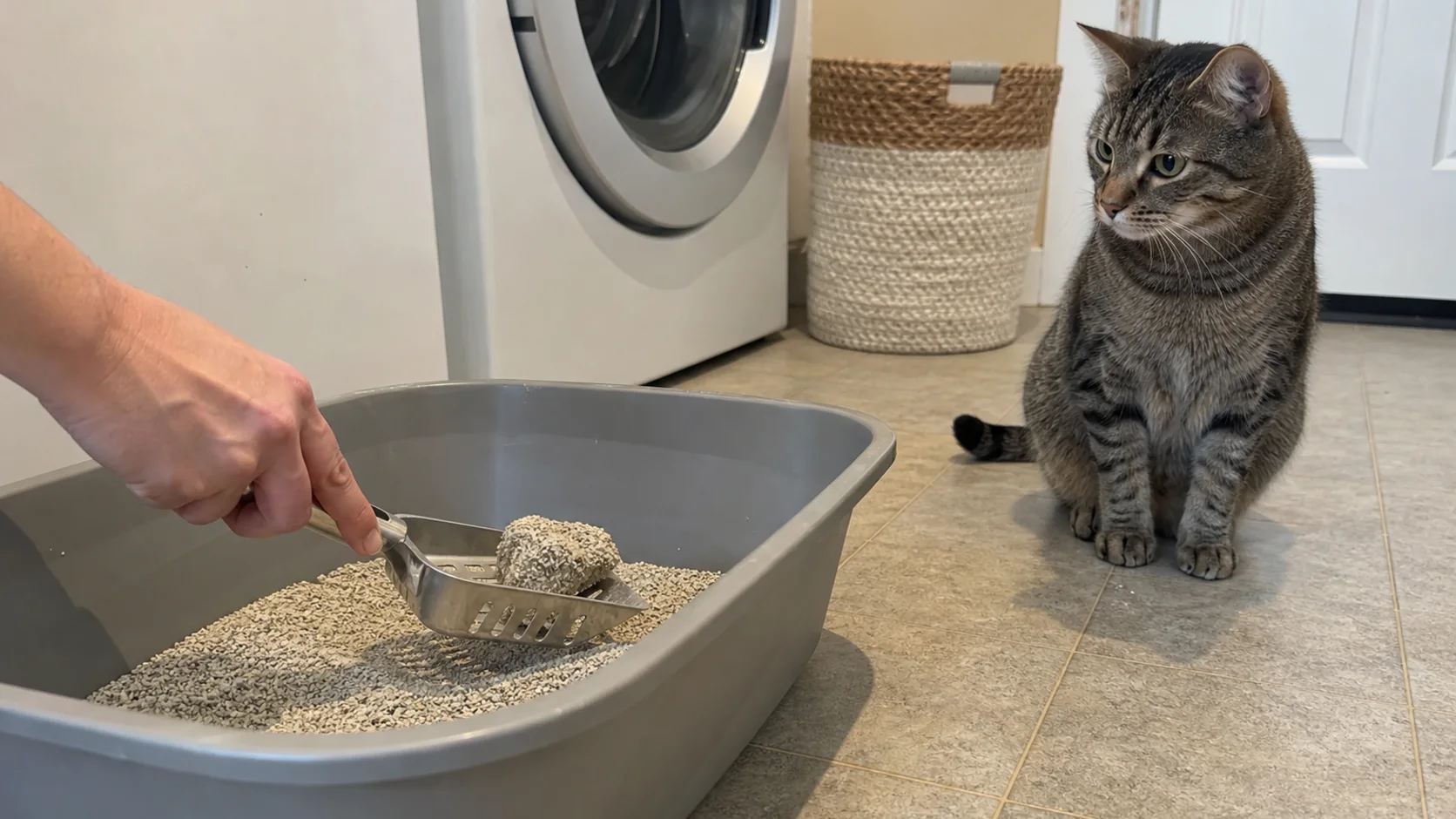
Cat Litter Box Health Log
Quick answer: A cat’s litter box habits are one of the most reliable windows into their internal health. Changes in urination frequency, clump size, straining, or missing the box are frequently the first signs of serious feline medical conditions like feline lower urinary tract disease (FLUTD), urethral obstruction (a life-threatening emergency in male cats), urinary tract infections (UTIs), or kidney issues. Maintaining a clear cat litter box health log helps multi-cat owners track habits and share accurate data with veterinarians.
Feline elimination reference guide
Understanding your cat’s individual baseline helps you notice meaningful changes. Exact frequency, visit duration, and clump size vary with diet, litter type, water intake, medications, and health, so the guide below avoids universal numeric cutoffs.
| Metric | Track Your Cat’s Baseline | Contact a Veterinarian | Emergency Red Flags |
|---|---|---|---|
| Urination | Usual daily pattern and approximate clump size for the litter used | A sustained change in frequency, volume, or location | Repeated straining with little or no urine, severe pain, weakness, or collapse |
| Bowel Movements | Usual frequency, firmness, color, and ease of passing stool | Persistent diarrhea, constipation, blood, or a marked change from normal | Severe pain, collapse, repeated vomiting, or suspected obstruction |
| Litter Box Visits | Usual visit pattern and behavior | Repeated visits, vocalizing, excessive licking, or avoiding the box | Inability to pass urine, especially in a male cat |
| Box Use | Which box each cat prefers and where accidents occur | New house-soiling after previously consistent use | Combine urgent signs with immediate veterinary assessment |
Recognizing feline urinary emergencies (FLUTD & Blockages)
A urethral blockage occurs when mucus, crystals, or inflammation plug a cat's urethra. This is a critical veterinary emergency, particularly in male cats.
- Straining without urine: If your cat repeatedly strains but produces no urine or only small drops, seek emergency veterinary care immediately. A complete urethral obstruction is life-threatening and extremely painful; do not wait for a fixed-hour threshold.
- Crying or howling while attempting to urinate: Vocalizing during urination indicates acute pain.
- Licking genital region excessively: Frequent grooming of the hindquarters often accompanies urinary discomfort.
Essential litter box rules for multi-cat homes
1. Follow the N + 1 rule: Provide one litter box for every cat in your home, plus one extra (e.g., 3 boxes for 2 cats). 2. Separate box locations: Do not line up boxes side-by-side in one room. Place them on different floors or in separate rooms to prevent resource guarding. 3. Scoop daily, deep clean monthly: Scoop boxes at least once daily and replace non-clumping litter completely every 2 to 4 weeks.
Explore Petive’s litter box cleaning guide.
Common questions
Why is my cat urinating outside the litter box suddenly?
Inappropriate elimination is usually caused by medical issues (UTI, bladder stones, kidney disease) or environmental stress (dirty box, new pet, location conflict). Always rule out medical causes with a vet first.
What size should a cat's urine clumps be?
There is no reliable universal clump size because litter type, depth, diet, water intake, and the individual cat all change the result. Track your cat’s usual pattern. Repeated trips with little or no urine, straining, crying, or a sudden marked change require prompt veterinary advice; inability to urinate is an emergency.
How do I know which cat is using the litter box in a multi-cat home?
Use microchip-reading smart litter boxes, set up temporary non-invasive camera monitoring, or temporarily separate cats with dedicated boxes for 24 hours.
Monitor your cat's elimination habits, health logs, and vet schedules effortlessly with Petive.
Sources and editorial note
This guide was prepared by the Petive Editorial Team using guidance from established veterinary and animal-care organizations. Unless a named reviewer is shown, it has not been independently reviewed by a veterinarian. It provides general educational information, not veterinary diagnosis or treatment. Ask your veterinarian about your individual pet.