Pet Medication Schedule
Quick answer: Managing prescription medication for a pet requires precise timing, exact dosage tracking, and clear communication between family members and pet sitters. Double-dosing a pet because one person did not know a pill was already given can be dangerous, while missed doses can compromise treatment. A pet medication schedule template organizes Rx details, administration times, food instructions, and caregiver sign-offs in one accessible place.
Essential components of a pet medication log
Every medication entry must be documented clearly to protect your pet’s health.
| Requirement | Details to Record | Why It Matters |
|---|---|---|
| Medication Name | Exact Rx name & strength (e.g., Carprofen 75mg) | Prevents mix-ups between multiple prescriptions |
| Prescribed Dosage | Amount per dose (e.g., 1 tablet or 2.5 ml) | Ensures exact veterinary instructions are met |
| Frequency & Timing | Intervals (e.g., Every 12 hrs at 8 AM / 8 PM) | Maintains stable therapeutic blood levels |
| Administration Rule | With food, on empty stomach, pill pocket | Avoids stomach upset or reduced absorption |
| Caregiver Initials | Name/initials of person giving dose | Creates a clearer handoff record and helps reduce double-dosing risk |
Printable pet medication tracking form
======================================================
             PETIVE MEDICATION TRACKING LOG
======================================================
Pet Name: _____________________  Vet Phone: ____________

Medication 1: __________________  Dose: ________________
Instructions: ( ) With Food  ( ) Empty Stomach  ( ) Other
------------------------------------------------------
Date      | Scheduled Time | Time Given | Given By (Initials)
----------+----------------+------------+---------------------
___/___   | ____ AM/PM     | ____ AM/PM | _________
___/___   | ____ AM/PM     | ____ AM/PM | _________
___/___   | ____ AM/PM     | ____ AM/PM | _________

Medication 2: __________________  Dose: ________________
Instructions: ( ) With Food  ( ) Empty Stomach  ( ) Other
------------------------------------------------------
Date      | Scheduled Time | Time Given | Given By (Initials)
----------+----------------+------------+---------------------
___/___   | ____ AM/PM     | ____ AM/PM | _________
___/___   | ____ AM/PM     | ____ AM/PM | _________
======================================================
Safety guidelines for household medication handoffs
- Never give human medication: Only administer medications prescribed specifically for your pet by a licensed veterinarian.
- Set recurring phone alarms: Schedule alarms for exact dosage times to prevent delayed doses.
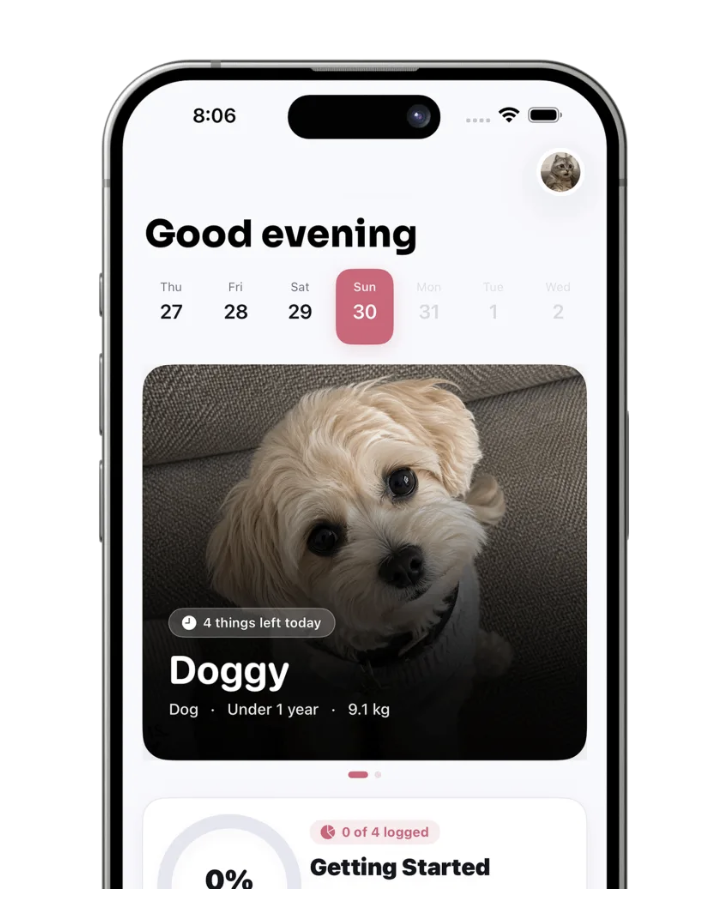
- Use a shared history: A caregiver can log a completed dose in Petive, and Shared Pack members may see that entry in the pet’s history. Reminder schedules are device-based, so do not rely on a household-wide notification as proof of a dose.
Explore Petive’s printable pet medication schedule.
Common questions
What should I do if I accidentally miss a pet medication dose?
Contact your veterinarian or pharmacy for advice. Never give a double dose to make up for a missed one unless explicitly instructed by your vet.
How do I safely store pet prescription medications?
Store medications according to label directions (room temperature or refrigeration), away from direct sunlight, and completely out of reach of pets and children.
What should I do if my pet vomits shortly after taking medication?
Do not immediately re-administer the pill. Call your veterinary clinic, report the timing, and ask whether a replacement dose is appropriate.
Keep your pet's prescription routines safe and synchronized across your entire family with Petive.
Sources and editorial note
This guide was prepared by the Petive Editorial Team using guidance from established veterinary and animal-care organizations. Unless a named reviewer is shown, it has not been independently reviewed by a veterinarian. It provides general educational information, not veterinary diagnosis or treatment. Ask your veterinarian about your individual pet.