Track a New Pet Medication
Quick answer: When your pet starts a new medication, record every dose, the reason it was prescribed, baseline symptoms, appetite, water intake, bathroom habits, energy, behavior, and any new changes. Follow the label exactly and contact the prescribing veterinarian about suspected side effects, missed doses, vomiting after a dose, or uncertainty—never adjust or discontinue treatment on your own.
Create a baseline before the first dose
It is difficult to judge a change without knowing what was happening first. Before treatment begins, write down the symptom being treated and your pet’s usual appetite, drinking, stool, urination, sleep, activity, and behavior. Record any vomiting, coughing, itching, limping, pain, or other relevant sign with a time and frequency.
Also save the medication’s exact name, strength, dose, route, schedule, start date, planned duration, prescribing clinic, and storage instructions. Photograph the label for reference, but use the dispensing label—not a memory or an old online description—as the source of truth. List every other prescription, supplement, preventive, and over-the-counter product your pet receives so the veterinarian can assess interactions.
If your pet is already unwell, note which signs existed before treatment. That simple distinction can prevent a pre-existing symptom from being mistaken for a new reaction.
Record doses in a way nobody can misunderstand
For each dose, log the date, exact time, amount, method, and caregiver. If a tablet was partly spit out, liquid was spilled, or the pet vomited soon afterward, write what happened and call for instructions. The correct response depends on the drug, dose, and timing; automatically repeating it could cause an overdose.
Use reminders as prompts, then mark a dose complete only after it has been given. In a shared household, “I was going to do it” must look different from “I gave it at 8:03 a.m.” Keep the original container, follow storage directions, and use the measuring device supplied or recommended for liquid medicine.
Track treatment response separately from dose completion. If the medicine is for itching, count scratching episodes or note sleep disruption. If it is for pain, record movement, posture, willingness to use stairs, and ability to settle. Objective observations make a follow-up conversation more useful than “better” or “worse.”
Watch for changes without trying to diagnose them
Possible side effects vary widely. Monitor appetite, vomiting, diarrhea, stool color, thirst, urination, alertness, coordination, breathing, skin, facial swelling, and behavior, but prioritize the specific risks the veterinarian explained. Note when a change began in relation to a dose, whether it repeated, and whether it is progressing.
Call the clinic promptly for a suspected reaction or a meaningful change. Seek emergency help for difficulty breathing, collapse, seizures, severe weakness, facial swelling with breathing or swallowing difficulty, or other signs the veterinary team identifies as urgent. Do not give another animal’s medicine, human medicine, or an internet remedy.
Avoid these medication-tracking mistakes
Do not rely on a pill organizer alone; it may show that a compartment is empty, not who gave the dose or when. Avoid vague notes such as “medicine done.” Do not combine several pets in one medication list, and archive old prescriptions so they cannot be mistaken for active instructions.
Do not wait for the next scheduled appointment if a concerning reaction appears. Conversely, do not stop an important medication because of a mild change without asking the prescriber. Some treatments require tapering, testing, or a carefully timed alternative.
How Petive creates a usable medication timeline
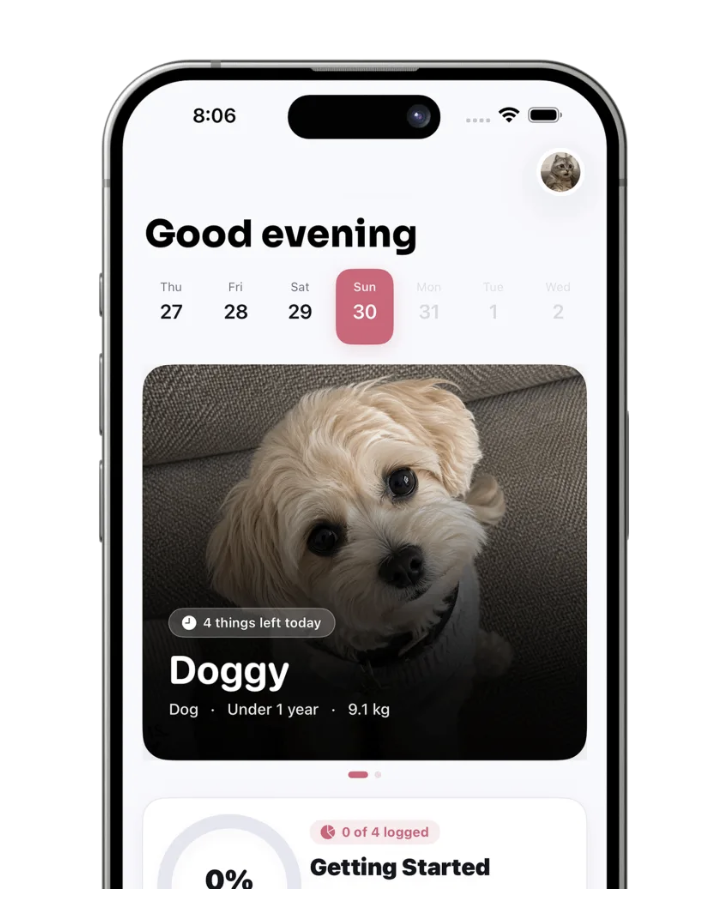
Petive can connect medication reminders with completed entries in the pet’s daily timeline. Each caregiver can see what was given and add context about appetite, symptoms, behavior, water, weight, or bathroom habits. Health records keep the prescription details and veterinary notes attached to the correct pet.
This creates a single chronology: dose at 8:03, meal at 8:30, vomiting at 9:10, clinic called at 9:22. That sequence is far more useful than scattered messages. Luna may help turn observations into questions for the veterinarian, but it should not decide whether to change a dose or diagnose a reaction.
Explore Petive’s medication reminders.
Quick medication checklist
- Save the prescription label and the veterinarian’s instructions.
- Record a baseline before treatment begins.
- Log the exact dose, time, method, and caregiver.
- Track the target symptom and meaningful new changes.
- Keep other medications and supplements on the same current list.
- Call rather than guessing about a missed, spilled, or vomited dose.
Common questions
What if I miss my pet’s medication time?
Check the dispensing instructions and call the prescribing clinic if they do not clearly address it. The answer depends on the drug and how late the dose is. Never double a dose unless specifically instructed.
Should I track mild changes in appetite or sleep?
Yes, briefly and objectively—especially if the change begins after treatment starts or repeats after doses. The clinic can decide whether it is expected, unrelated, or needs action.
How long should I keep the medication log?
Keep it through the full course and any follow-up period. For ongoing medication, maintain a continuous record and bring a summary to rechecks, including refill and laboratory-monitoring dates.
Make the first dose the beginning of a clear record, not another message thread. Add the prescription and reminders to Petive so every caregiver can see what happened and what needs attention next.
Sources and editorial note
This guide was prepared by the Petive Editorial Team using guidance from established veterinary and animal-care organizations. Unless a named reviewer is shown, it has not been independently reviewed by a veterinarian. It provides general educational information, not veterinary diagnosis or treatment. Ask your veterinarian about your individual pet.